
Navigating Medium and High Voltage Infrastructure: A Buyer’s Guide to Switchgear Panels
For on-site project managers and global EPC teams, electrical distribution infrastructure is undeniably the core guarantee for stable operation of industrial plants, renewable energy stations and regional public power grids. When it comes to protecting large-scale project assets, choosing qualified high voltage switchgear and matched low voltage panel devices becomes one of the most critical procurement decisions.
Many overseas buyers easily ignore site environment adaptation and global compliance rules when purchasing power distribution equipment. In actual engineering cases, mismatched switchgear models will lead to frequent shutdown risks, which will bring unnecessary economic loss to factory operation and power grid operation.
Technical Overview: High Voltage and Low Voltage Switchgear Panels
In the global electrical industry, switchgear assemblies are mainly classified by rated voltage, which decides overall cabinet structure, internal insulation materials and on-site operation safety specifications.
High Voltage Switchgear Panels
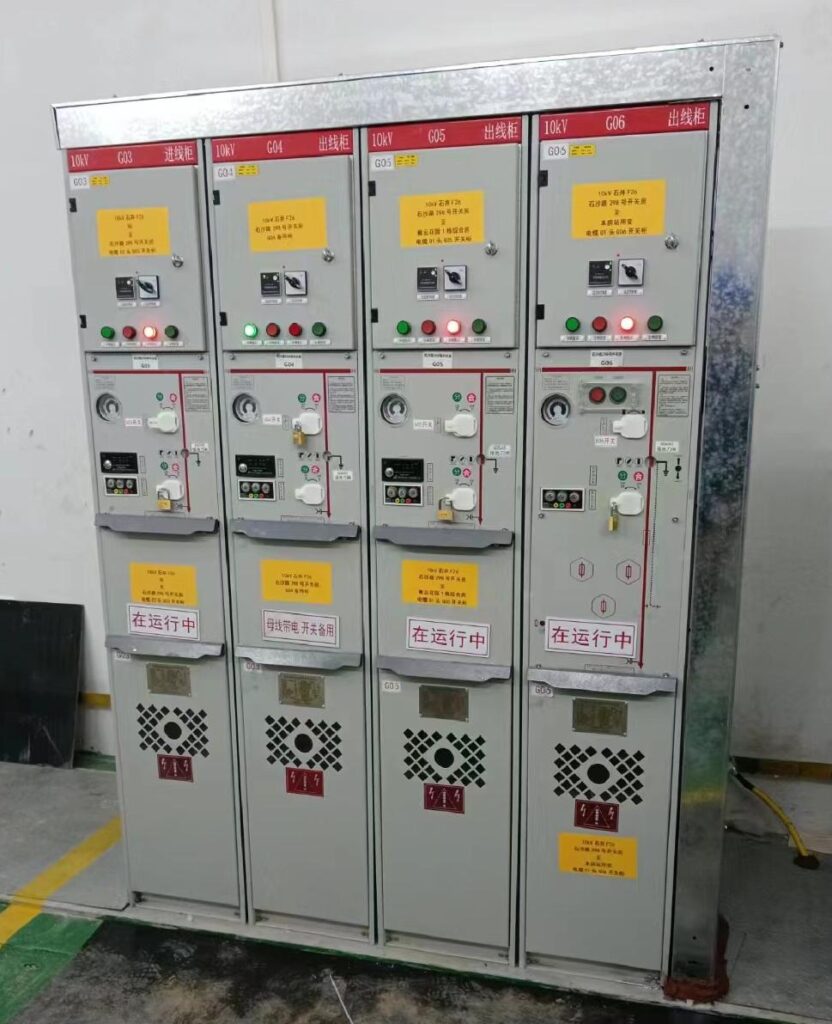
Covering medium voltage and high voltage working ranges from 1 kV to 36 kV or higher, high voltage switchgear is designed for centralized power control, equipment isolation and fault protection for large power grid systems. Most mainstream cabinet types adopt mature arc extinguishing technology, including standard Sulfur Hexafluoride (SF6) gas design, vacuum interrupter structure and clean air insulation structure. These professional designs can cut off sudden fault current safely, and complete step-down power transmission for downstream substation equipment steadily.
Low Voltage Switchgear Panels
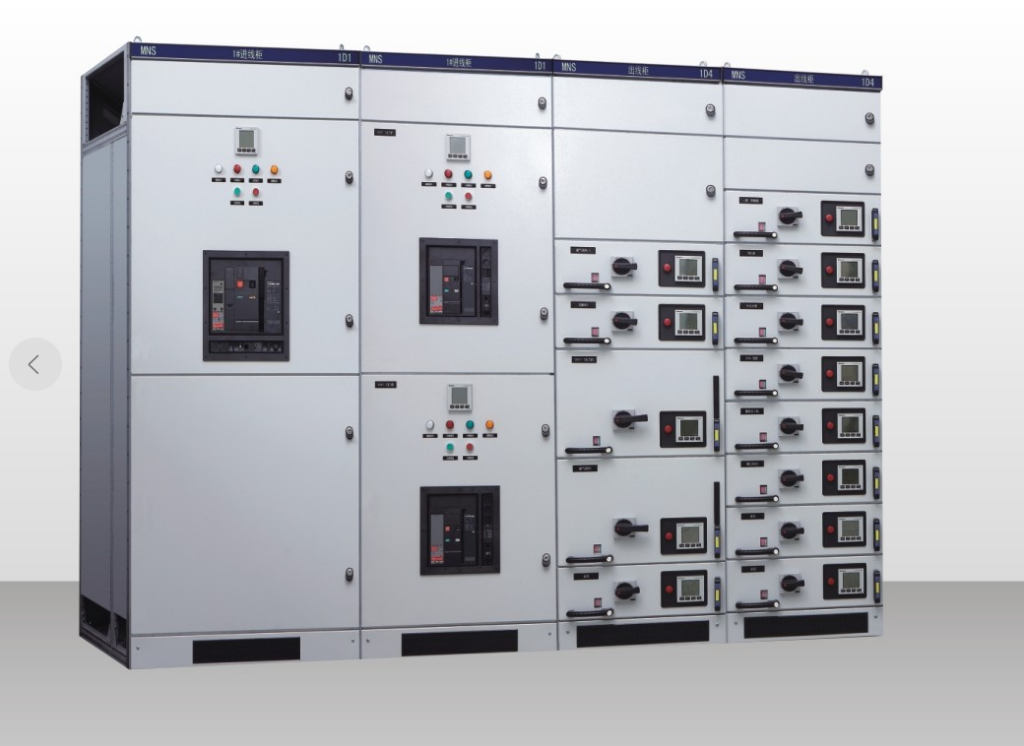
Installed on the secondary side of distribution transformers, conventional low voltage panel equipment runs below 1 kV, with common working voltage from 400V to 690V. Equipped with standard ACB air circuit breakers, MCCB molded case breakers and matched control components, such low voltage cabinets supply stable power for factory mechanical equipment, motor control systems and daily auxiliary power systems. Thermal control and targeted circuit protection are the core design points for long-term field use.
Common Application Scenarios
Combined with years of overseas project experience, we sort out three mainstream application scenarios for high and low voltage distribution cabinets for buyer reference.
- Renewable and Conventional Power Plants
Grid-connected solar power stations, wind energy projects and traditional thermal power stations rely on high voltage switchgear to finish power boost and grid connection work. Meanwhile, supporting low voltage switchgear panels undertake power supply for internal cooling devices, tracking systems and daily auxiliary electric equipment inside the whole power plant.
- Heavy Industrial and Manufacturing Facilities
Petrochemical factories, metallurgical steel plants and large mining sites have extremely high power consumption and power stability requirements. High voltage cabinets receive incoming grid power on site, then complete voltage conversion. Cooperated with complete low voltage panel distribution system, it supports normal operation of production assembly lines, large motors and factory HVAC electric systems.
- Cross-Border Infrastructure and EPC Projects
Overseas port construction, railway supporting power projects and large data center projects put forward unified standard requirements for switchgear products. Modular container-type switchgear is widely adopted for its convenient installation and strong environmental adaptability, which can adapt to high temperature, humid and coastal corrosive working environments in different countries.
Installation Standards and Compliance
Complying with international unified electrical standards can effectively avoid arc flash safety accidents, and ensure all switchgear equipment passes third-party inspection for global project bidding.
IEC and IEEE Frameworks
The global manufacturing and acceptance of switchgear follow two authoritative industry systems: IEC international electrical standard and IEEE regional power operation standard.
For all low voltage distribution cabinets, IEC 61439-1/2 certification is compulsory. This standard verifies cabinet temperature resistance, short circuit bearing capacity and internal insulation performance officially.
For high voltage metal-clad switchgear above 1kV up to 52kV, manufacturers must follow the full requirements of IEC 62271-200 standard for production and type test.
MV Switchgear Safety Standards
When purchasing medium and high voltage power distribution equipment, buyers need to pay attention to the official IAC internal arc protection grade. Certified IAC structure can discharge explosion heat and gas outwards safely when internal short circuit fault occurs, protecting on-site operators from personal injury and reducing cabinet damage.
Preventive Maintenance and Life-Cycle Management
Unexpected power outage will cause huge economic loss for industrial enterprises. Regular standardized inspection and maintenance can effectively extend the service life of high and low voltage switchgear.
Routine High Voltage Switchgear Checklist
Insulation Assessment: Test SF6 gas pressure regularly, and check the integrity of vacuum interrupter parts on schedule. Partial discharge detection is recommended to find hidden insulation aging problems in advance.
Mechanism Lubrication: Clean internal transmission springs and linkage parts quarterly, and add special lubricating oil to guarantee sensitive tripping action during circuit faults.
Contact Resistance Testing: Detect contact micro-ohm resistance regularly to avoid local overheating caused by poor contact.
Routine LV Switchgear Maintenance Checklist
Low voltage panels run with large load current, so thermal aging is the main cause of equipment failure. The following maintenance items are suggested to be completed during annual factory shutdown inspection:
Maintenance Target Action Required Objective
Thermal Imaging Conduct infrared thermography on busbar joints and cable terminations under load. Identify high-resistance hotspots.
Torque Verification Check and retorque all mechanical bolted connections to manufacturer specifications. Mitigate vibration-induced loosening.
Breaker Testing Perform secondary current injection testing on ACB and MCCB trip units. Ensure accurate overcurrent and short-circuit protection.
Environmental Hygiene Vacuum accumulation of industrial dust, debris, and verify enclosure gasket seals. Prevent tracking faults and moisture ingress.
Scientific daily maintenance can greatly lower arc flash failure probability of on-site low voltage distribution equipment.
Frequently Asked Questions (FAQ)
Q1: Can your switchgear panels be customized to fit space-constrained retrofitting projects?
Yes. Engineering designs can be tailored to compact footprints, including gas-insulated switchgear (GIS) for high-voltage applications where space is limited, or custom-configured, back-to-back low-voltage motor control centers.
Q2: How do your products ensure compliance with differing regional grid codes?
Our manufacturing processes adhere strictly to global benchmarks, including IEC 62271-200 for high voltage systems and IEC 61439 for low voltage setups. We provide fully type-tested certifications from independent laboratories (such as KEMA or ASTA) to satisfy international EPC and utility requirements.
Q3: What is the typical operational lifespan of your high voltage switchgear?
With adherence to prescribed MV switchgear safety standards and routine preventive maintenance, our switchgear systems are engineered for an operational lifespan exceeding 30 to 40 years.
Q4: Do you provide on-site commissioning and support for overseas engineering contractors?
We offer comprehensive technical support, including remote engineering consultation, factory acceptance testing (FAT), and on-site field engineers to supervise installation, site acceptance testing (SAT), and commissioning globally.
Guangdong Lanteng Electric Co., Ltd. specializes in manufacturing high-quality medium and low voltage switchgear panels that meet IEC and CE standards. With multiple patents and a focus on reliability, we provide customized solutions for industrial plants, renewable energy projects, and cross-border EPC applications.